The Journal ·
How to Taste Chocolate: A Five-Bar Tasting Flight at Home
Snap, smell, melt, wait. A simple method for tasting chocolate properly, and a flight of five single-origin bars that shows how much difference the growing country makes.
Most of us eat chocolate quickly, a square at a time, while doing something else. That is a perfectly good way to enjoy it, but it hides most of what a good bar has to offer. Tasting chocolate on purpose takes about ten minutes, needs no equipment, and is the fastest way to work out what you actually like.
This guide covers the method, then suggests a five-bar flight you can put together from our origin atlas. The idea is to taste across countries at roughly the same cocoa percentage, so the differences you notice come from the beans rather than the sugar.
Before you start
Taste at room temperature. Chocolate straight from the fridge releases very little aroma, and a cold mouth dulls flavour. If your bars have been in a cold cupboard, leave them out for an hour.
Avoid strong flavours beforehand: coffee, mint toothpaste and spicy food all linger. Have a glass of room-temperature water nearby and something plain to reset your palate between bars. Unsalted crackers or a slice of plain bread work well.
Taste from mildest to darkest. A 70% bar tasted after a 100% one will seem oddly sweet and thin. Our intensity scale is handy here: line the bars up by their band, from smooth through rich to intense.
The five steps
1. Look
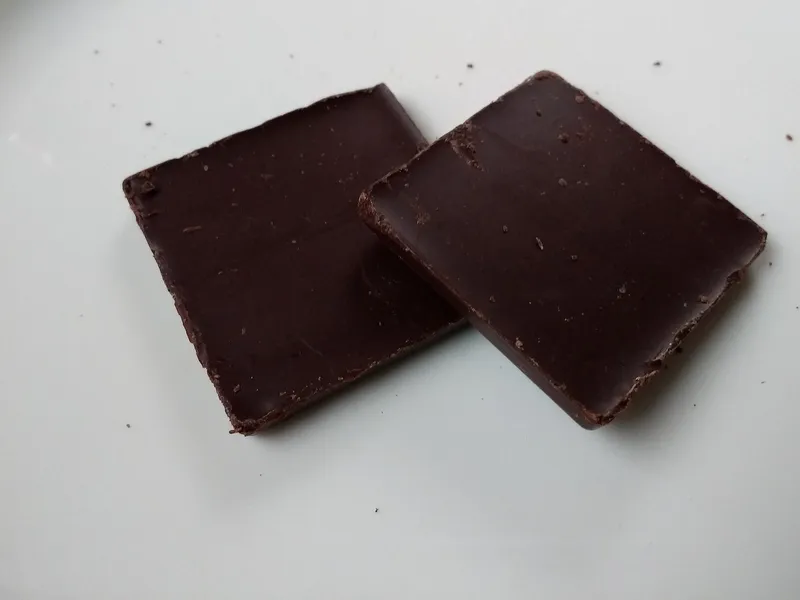
Well-tempered chocolate has an even, glossy surface. Pale grey streaks or a dusty white film are bloom, caused by heat or damp. Bloomed chocolate is safe to eat, but the texture suffers, so it is worth knowing what you are looking at. Colour is a poor guide to strength: some origins naturally give lighter or redder chocolate than others at the same percentage.
2. Snap
Break off a square near your ear. A dark bar in good condition breaks with a clean, sharp crack. A soft, bending break usually means the bar is warm, has a lot of milk in it, or was poorly tempered. Milk chocolate always snaps less crisply than dark, so compare like with like.
3. Smell
Rub the broken edge with your thumb to warm it, then smell it before you taste. Much of what we call flavour is aroma, and you will often pick out fruit, roasted nuts, flowers or coffee here more clearly than in the mouth.
4. Melt
Put a piece on your tongue and let it melt rather than chewing. Press it gently against the roof of your mouth. This is the step most people skip, and it is where the bar changes most: the first impression is often sweet or roasty, and the fruit or acidity arrives later as the cocoa butter melts. Notice the texture too. Is it smooth or slightly gritty? Does it coat your mouth or melt cleanly?
5. Wait
After you swallow, keep paying attention for twenty or thirty seconds. Good chocolate has a long finish that shifts as it fades. Some bars finish bitter and dry, some fruity, some with a lingering sweetness. Write a word or two down before moving on, or the bars will blur together by the third one.
A five-bar flight by origin
These suggestions all sit between 70% and 78%, in the rich band of our scale, so you are comparing origins rather than strength. Products come and go from our partners' ranges, so swap in anything similar from the same origin page if one has sold out.
- Madagascar. The Amedei Madagascar 72% or Willie's Sambirano Gold 71%. Madagascan cacao is known for bright, red-fruit acidity, which makes it a useful first bar: if you taste raspberry or citrus here, you know what to listen for in the others. More on the Madagascar page.
- Peru. Willie's Chulucanas Gold 70% or Bonnat's Alto Piura 75%. Peruvian bars often taste softer and fruitier than you expect at this percentage. See the Peru page for why it varies so much by region.
- Vietnam. Marou's Dak Lak 70%. Marou names each bar after the province its beans come from, so you can go on to compare provinces within one country. The Vietnam page lists the rest of the range.
- Venezuela. The Amedei Chuao 70%. Chuao is one of the most famous cacao villages in the world, and Venezuelan chocolate tends towards nut and caramel rather than fruit. Read more on the Venezuela page.
- Ecuador. The Amedei Ecuador 77%, or the organic Alter Eco 70% Ecuador if you want something easier to find. Look for floral notes. The Ecuador page explains the Nacional variety behind them.
Once you have found the origin you like best, try one bar from it in a different band. A Pump Street Ecuador 85% after the Amedei 77% shows how much the percentage changes a familiar origin. For a single benchmark of very dark supermarket chocolate, Lindt Excellence 85% is a fair reference point.
Alter Eco · Amazon UK
Alter Eco 70% Ecuador Dark Chocolate, 100g
Organic and Fairtrade dark chocolate with a short ingredient list.
70% RichLindt · Amazon UK
Lindt Excellence Dark 85% Cocoa Chocolate Bar, 100g
The supermarket-shelf benchmark for very dark chocolate: thin squares, low sugar and a dry, earthy finish.
85% IntenseMegan Giller · Amazon UK
Bean-to-Bar Chocolate: America's Craft Chocolate Revolution
A guide to the craft chocolate movement, with a lot on origins, makers and how to taste.
Affiliate links; stock checked daily.
Words that help
You do not need a professional vocabulary, but a few broad families make notes easier to compare: fruit (red, citrus, dried), nut (almond, hazelnut, roasted), roast (coffee, toast, tobacco), floral, earthy and sweet (caramel, honey, vanilla). Start by deciding which family a bar belongs to, then narrow it down if a specific note jumps out.
If you want to go further, Megan Giller's Bean-to-Bar Chocolate has a good section on tasting, and our article on the six steps from bean to bar explains where these flavours come from in the first place. If you get the bug for making as well as tasting, our guide to tempering chocolate at home is the natural next step.
More from the Journal
Peru, Ecuador and Colombia: A Beginner's Guide to South American Chocolate
Three neighbouring countries, three quite different styles of chocolate. What to expect from each origin, what to look for on the…
Fairtrade, Organic, Bean-to-Bar: What the Words on a Chocolate Wrapper Mean
Some words on a chocolate wrapper are defined in law or by a certifier. Others are just marketing. A plain guide to which is…
Buying Chocolate in Bulk in the UK: A Practical Guide
Buying chocolate in bulk in the UK: boxes of Cadbury, bulk novelties for parties and baby showers, kilo bags for baking, and when…